 MyGDC
MyGDCCaring for a diverse patient population
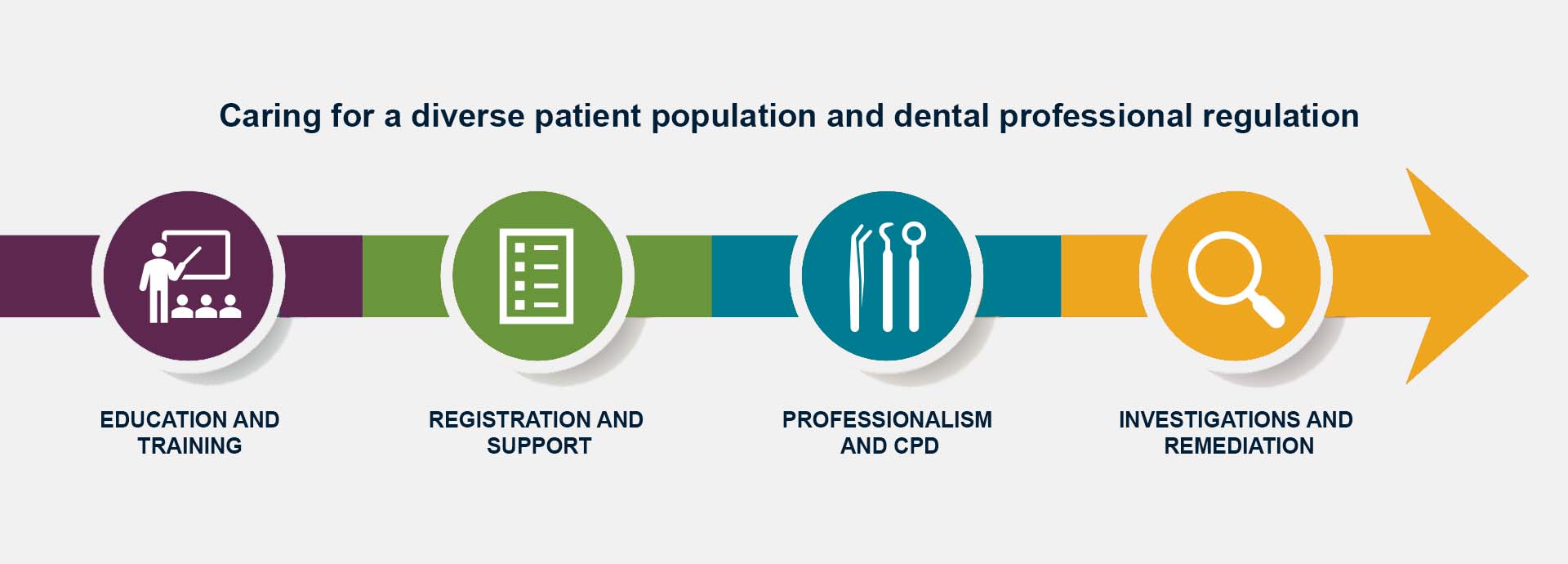
We want to ensure that all dental professionals are equipped to meet the needs of a diverse patient population. From setting education standards, to sharing evidence on patient expectations, we want to support dental professionals to provide safe and effective care to everyone.
Safe Practitioner framework for dental education
The Safe Practitioner framework came into effect in August 2025. It was revised after extensive engagement with education and training providers and dental professionals and published in November 2023, following a public consultation on the proposed updates.
The updated framework introduces specific behaviours that trainee dental professionals are expected to demonstrate during their training and continue to embody as practising professionals, as well as strengthening the learning outcomes associated with EDI. It means that graduating dental professionals are equipped with the insights needed to provide effective care to a diverse patient population.
The Safe Practitioner framework also includes requirements to help ensure that students and dental professionals understand the value of diversity, foster inclusive working environments and feel able to challenge discrimination.
Standards for Education
The Standards for Education set out requirements for providers of dental education and training programmes that lead to UK registration for dental professionals.
The Standards for Education were updated and published following a public consultation in 2025. They came into effect at the start of the 2026/27 academic year, after a transition period that included working with providers on how they could demonstrate that the requirements were being met.
The Standards for Education and the Safe Practitioner framework work together and form the basis of our education quality assurance activities, which include monitoring and inspecting programme providers.
The latest updates to the Standards for Education include new requirements that support fairness and inclusion for programme applicants and the successful completion of dental education and training for all students. We have also started looking at differential attainment.
Dental education and training providers need to:
- Demonstrate that admissions processes are fair, inclusive and transparent.
- Identify barriers before and during the programme that may disproportionately impact marginalised groups, and take action to address them.
We publish a summary of the results of our quality assurance activities each year, as part of our Review of Education.
Registration requirements
Dental professionals need to be registered with the GDC, and have indemnity/insurance in place, before they can legally practise dentistry in the UK. Dental professionals need to share details of their completed education and training, as part of that process.
Dental education and training programmes in the UK are based on the Safe Practitioner framework, which includes specific EDI learning outcomes. This helps to ensure all graduating dental professionals in the UK have the necessary skills and knowledge to provide safe and effective care to a diverse patient population.
Dental professionals who qualify in the EEA have their qualifications recognised for the purposes of GDC registration under arrangements put in place by the UK government following our departure from the EU. Dental professionals who qualify outside the EEA, need to pass a statutory examination before they are eligible for registration.
Our Overseas Registration Examination (ORE) is mapped to the learning outcomes for dentists, as set out in Preparing for Practice (transitioning to the Safe Practitioner within the next three years), including EDI requirements. We have a complaints process for ORE candidates who feel they may have been disadvantaged by potential issues with our processes and procedures.
Supporting those new to UK practice
We understand that those who are new to UK dental practice may benefit from further support, as they adjust to a new practice environment and patient population.
We offer a two-hour webinar to all dental professionals who qualify outside the UK and join our registers. These sessions are offered to all new registrants who join the registers with an overseas qualification, within 12 months of registration.
The session covers standards and regulatory requirements, highlights cultural considerations relevant to the UK and safeguarding of vulnerable patients.
Understanding a diverse patient population
We regularly carry out research to learn more about patient expectations and their experiences of dental services. Using research, statistical analyses and engagement, we work to ensure that we capture a diversity of perspectives, experiences and needs. Our work highlights where there are different findings in cohort groups that share protected characteristics.
Our research findings can help dental professionals to understand how care and services can be improved for different patient groups.
Our most recent research to understand patient expectations:
- Views and experiences of dentistry 2024
- Views and experiences of dentistry – 2022 survey of the UK public
- COVID-19 and dentistry – survey of the UK public 2021
Professional standards for dental professionals
The Standards for the Dental Team describe how dental professionals are expected to provide a supportive, inclusive and respectful environment for the public, patients and dental team members.
Our standards are further supported by our statement on maintaining professional standards. It sets out what is expected of dental professionals, and makes it clear that we will take seriously and act on concerns reported to us about discrimination against any individual or group, based on their protected characteristics.
Professional development and learning
Dental professionals undertake Continuing Professional Development (CPD) to ensure their skills and knowledge are kept up to date. We ask dental professionals to complete a minimum number of CPD hours, across each five-year cycle.
The types of CPD that dental professionals choose to complete will vary and depend on factors, such as their individual professional development needs, field of dental practice, course availability and scheme requirements. The CPD scheme requires dental professionals to complete high quality CPD activities that can be verified and meet one or more CPD development outcomes.
Development outcome D provides for CPD activities that support the maintenance of skills, behaviours and attitudes, which maintain patient confidence in dental professionals and put patients’ interests first. CPD guidance provides examples of the types of content that would satisfy this development outcome. These are:
- Equality and diversity training.
- Professional behaviours.
- Ethical and legal issues and development.
We recommend some CPD topic areas to dental professionals because regularly refreshing skills in these areas contributes to the provision of safe and effective care. These CPD recommendations include the following areas:
- Safeguarding vulnerable adults.
- Safeguarding children and young people.
- Legal and ethical issues.
- Complaint handling.
The administrative requirements of the CPD scheme were reviewed in early 2025 to make it easier for dental professionals to complete, record and evidence the CPD completed during each five-year cycle.
The resulting changes have provided additional flexibility to minimise barriers faced by some groups of dental professionals. We have:
- made it easier to evidence and record CPD (mapping document) completed in another country, supporting those from diverse backgrounds
- raised awareness of CPD grace periods, which provide an addition 56 days to complete required hours, supporting those who may have to respond to changes in circumstances, such as new caring responsibilities.
Professionals who fall short of our standards
We provide advice and guidance on reporting serious concerns about the conduct or behaviour of a dental professional. We will investigate if we receive a report that a dental professional has fallen short of our standards.
More on reporting discrimination or sexual misconduct.
Easy read on reporting serious concerns about a dentist or dental worker.
We ask dental professionals to reflect on any serious concerns raised by others, as part of our fitness to practise investigations and processes. Depending on the circumstances, the process encourages learning by asking dental professionals to:
- reflect on the concerns raised
- demonstrate insight and contrition, and
- remediate as directed.
More on the importance of reflective practice.